| Pessoas | Possessive Adjectives |
Possessive Pronouns |
Tradução |
| I | My | Mine | Meu(s), minha(s) |
| You | Your | Yours | Teu(s), tua(s), seu(s), sua(s), de você |
| He | His | His | Dele(s), seu(s), sua(s) |
| She | Her | Hers | Dela(s), seu(s), sua(s) |
| It | Its | Its | Dele(s), dela(s), seu(s), sua(s) |
| We | Our | Ours | Nosso(s), nossa(s) |
| You | Your | Yours | Vosso(s), vossa(s), seu(s), sua(s), de vocês |
| They | Their | Theirs | Dele(s), dela(s), seu(s), sua(s) |
quarta-feira, 26 de setembro de 2012
Possessive Adjectives

segunda-feira, 24 de setembro de 2012

Wh questions
| Question Word | Function | Example |
|---|---|---|
| what | asking for information about something | What is your name? |
| asking for repetition or confirmation | What? I can't hear you. You did what? |
|
| what...for | asking for a reason, asking why | What did you do that for? |
| when | asking about time | When did he leave? |
| where | asking in or at what place or position | Where do they live? |
| which | asking about choice | Which colour do you want? |
| who | asking what or which person or people (subject) | Who opened the door? |
| whom | asking what or which person or people (object) | Whom did you see? |
| whose | asking about ownership | Whose are these keys? Whose turn is it? |
| why | asking for reason, asking what...for | Why do you say that? |
| why don't | making a suggestion | Why don't I help you? |
| how | asking about manner | How does this work? |
| asking about condition or quality | How was your exam? | |
| how + adj/adv | asking about extent or degree | see examples below |
| how far | distance | How far is Pattaya from Bangkok? |
| how long | length (time or space) | How long will it take? |
| how many | quantity (countable) | How many cars are there? |
| how much | quantity (uncountable) | How much money do you have? |
| how old | age | How old are you? |
| how come (informal) | asking for reason, asking why | How come I can't see her? |
My Routine
I usually wake up at 5:30 a.m. After I go to the bathroom to brush my teeth and comb my hair and after I have breakfast. Then I go to the university by bus . The classes usually start at 8:00 a.m. and finish at 11:20; Once I come back from university, I always have lunch with my mon at 14:30 p.m. In the afternoon I like to relax for some time, I watch television, and sometime get a little snack with my sons. After I do some household and my homework. Then I take a shower and I go to computer. I have dinner with my family at 9:00 p.m. and go to bed later around 10:00 o'clock.
Short Answers
| SIMPLE PRESENT = Do/Does + Sujeito + Verbo+ … ? VERB TO BE= Verbo BE + Sujeito + … ? | ||
|---|---|---|
segunda-feira, 17 de setembro de 2012

Present simple
Modelo de conjugação do verbo to work no simple present em inglês
| ||
Positive |
Negative
|
Interrogative
|
|
I work
|
I don’t work
|
Do I work?
|
|
You work
|
You don’t work
|
Do you work?
|
|
He works
|
He doesn’t work
|
Does he work?
|
|
She works
|
She doesn’t work
|
Does she work?
|
|
It works
|
It doesn’t work
|
Does it work?
|
|
We work
|
We don’t work
|
Do we work?
|
|
You work
|
You don’t work
|
Do you work?
|
|
They work
|
They don’t work
|
Do they work?
|
segunda-feira, 3 de setembro de 2012

Demonstrative Pronouns
Pronomes Demonstrativos (Pronomes Substantivos e Adjetivos) -
Demonstrative Pronouns and Demonstrative Adjectives
(Estes são os teus cadernos.) (pronome demonstrativo substantivo)
These copybooks are new. (demonstrative adjective)
(Estes cadernos são novos.) (pronome demonstrativo adjetivo)
(Aquela é a minha casa.) (pronome demonstrativo substantivo)
That house is new. (demonstrative adjective)
(Aquela casa é nova.) (pronome demonstrativo adjetivo)
(Aqueles são carros alemães.) (pronome demonstrativo substantivo)
Those cars are expensive. (demonstrative adjective)
(Aqueles carros são caros.) (pronome demonstrativo adjetivo)
Those clothes are expensive. (Aquelas roupas são caras.)
Os Demonstrative Pronouns servem para apontar, indicar e mostrar alguma coisa, lugar, pessoa ou objeto. Esses pronomes podem atuar como adjetivos, antes do substantivo, ou como pronomes substantivos. Observe mais detalhadamente os Pronomes Demonstrativos (Demonstrative Pronouns) listados abaixo:
1. THIS - ESTE, ESTA, ISTO
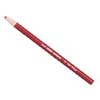
| This is my pencil. (demonstrative pronoun) (Este é o meu lápis.) (pronome demonstrativo substantivo) This pencil is red. (demonstrative adjective) (Este lápis é vermelho.) (pronome demonstrativo adjetivo) |
 |
2. THESE - ESTES, ESTAS
These are your copybooks. (demonstrative pronoun)(Estes são os teus cadernos.) (pronome demonstrativo substantivo)
These copybooks are new. (demonstrative adjective)
(Estes cadernos são novos.) (pronome demonstrativo adjetivo)
3. THAT - AQUELE, AQUELA, AQUILO, ESSE, ESSA, ISSO
That is my house. (demonstrative pronoun)(Aquela é a minha casa.) (pronome demonstrativo substantivo)
That house is new. (demonstrative adjective)
(Aquela casa é nova.) (pronome demonstrativo adjetivo)
4. THOSE - AQUELES, AQUELAS, ESSES, ESSAS
Those are German cars. (demonstrative pronoun)(Aqueles são carros alemães.) (pronome demonstrativo substantivo)
Those cars are expensive. (demonstrative adjective)
(Aqueles carros são caros.) (pronome demonstrativo adjetivo)
* Os Adjetivos, em
Inglês, não possuem gênero e número. Os Demonstrativos, com função de
adjetivo, são os únicos que concordam em número com o substantivo que
acompanham.
Por exemplo:Those clothes are expensive. (Aquelas roupas são caras.)
Possessive Pronouns
| Pronomes Possessivos Adjetivos Possessive Adjectives | Pronome Possessivos Substantivos Possessive Pronouns |
| my (meu, minha) | mine [(o) meu, (a) minha] |
| your (teu, tua, seu, sua) | yours [(o) teu, (a) tua, (o) seu, (a) sua] |
| his (dele) | his [(o)/(a) dele] |
| her (dela) | hers [(o)/(a) dela] |
| its [dele, dela (neutro)] | its [(o)/(a) dele, (o)/(a) dela (neutro)] |
| our (nosso, nossa) | ours [(o) nosso, (a) nossa] |
| your (vosso, vossa, seu, sua, de vocês) | yours [(o) vosso, (a) vossa, (o) seu, (a) sua] |
| their [deles, delas (neutro)] | theirs [(o)/(a) deles, (o)/(a) delas (neutro)] |
Pronouns
| Caso Reto (Sujeito) Subject Pronoun |
Caso Oblíquo (Objeto) Object Pronoun |
| I (eu) | me (me, mim) |
| you (tu, você) | you (lhe, o, a, te, ti, a você) |
| he (ele) | him (lhe, o, a ele) |
| she (ela) | her (lhe, a, a ela) |
| it (ele, ela [neutro]) | it (lhe, o, a) |
| we (nós) | us (nos) |
| you (vocês, vós) | you (vos, lhes, a vocês) |
| they (eles, elas) | them (lhes, os, as) |
My Paragraph
My name is Lya Araujo , I am 28 years old ; I'm from Rio de Janeiro and I live in Magé my address and 1500 , Helena street ; my favorite color is blue ; my birthday is on august 26th and I'm studying English because it
is very interesting.
Phonetics
Choose 5 words and write how
we can pronounce them.
Financial - /faɪˈnænʃəl/
Daughter - /ˈdɔ·t̬ər/
Subsidiary - /səbˈsɪdiəri/
Basic - /ˈbeɪ·sɪk/
Because - /bɪˈkɔz/
The colors
Cores em Inglês |
|---|
Amaranth
|
||
Amber
|
||
Aquamarine
|
||
Azure
|
||
Beige
|
||
Black
|
||
Blue
|
||
Blue-green
|
||
Blue-violet
|
||
Brown
|
||
Byzantium
|
||
Carmine
|
||
Cerise
|
||
Cerulean
|
||
Champagne
|
||
Chartreuse green
|
||
Coral
|
||
Crimson
|
||
Cyan
|
||
Electric blue
|
||
Erin
|
||
Gold
|
||
Gray
|
||
Green
|
||
Harlequin
|
||
Indigo
|
||
Ivory
|
||
Jade
|
||
Lavender
|
||
Lilac
|
||
Lime
|
||
Magenta
|
||
Magenta rose
|
||
Maroon
|
||
Mauve
|
||
Navy blue
|
||
Olive
|
||
Orange
|
||
Orange-red
|
||
Peach
|
||
Persian blue
|
||
Pink
|
||
Plum
|
||
Prussian blue
|
||
Pumpkin
|
||
Purple
|
||
Raspberry
|
||
Red
|
||
Red-violet
|
||
Rose
|
||
Salmon
|
||
Scarlet
|
||
Silver
|
||
Slate gray
|
||
Spring green
|
||
Taupe
|
||
Teal
|
||
Turquoise
|
||
Violet
|
||
Viridian
|
||
White
|
||
Yellow
|
Assinar:
Postagens (Atom)